
A crack in a wall, a door that suddenly sticks, a purchase on the calendar. Each one raises the same question: is this cosmetic, or is it time to call an engineer? Waiting can make a repair larger, while calling too early wastes time and budget.
This guide explains what a structural engineer inspection is, when it is justified, what drives the cost, and how prior documentation helps. It is written for owners and investors of multifamily and commercial properties across the United States.
What Is a Structural Engineer Inspection?
An Evaluation by a Licensed Professional
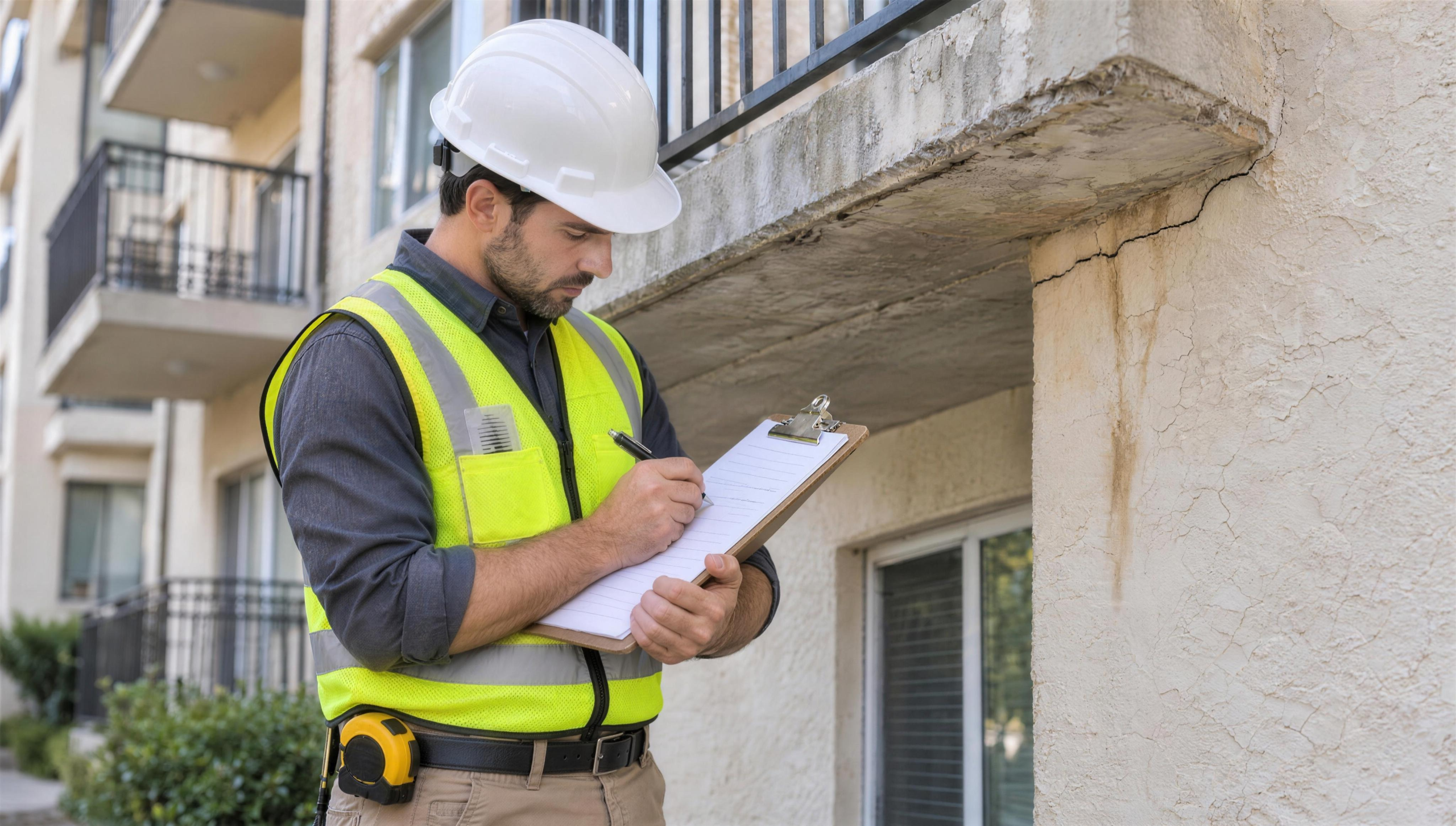
A structural engineer inspection starts with a visual examination of a building’s structure by a licensed professional. It covers the elements that carry loads, such as foundations, columns, beams, slabs, and load-bearing walls. The result is a professional opinion on what the findings mean and what to do about them.
Because it rests on professional judgment, this work is regulated and must be performed by appropriately licensed professionals. Photos, scans, and drone flights cannot replace it.
How an Inspection Differs From Documentation
Documentation records conditions. An inspection interprets them. Imagery, mapped observations, and measurements show what is there and where. The engineer’s evaluation says whether it is a concern and how urgent it is.
Owners sometimes ask for one when they need the other. A buyer who wants a clear picture may need documentation first. An owner watching a growing crack needs the engineer.
When a Structural Engineer Inspection Is Warranted
Warning Signs That Call for an Engineer
Some observations deserve a professional look instead of a wait-and-see approach:
- Cracks that are wide, growing, stepped, or running diagonally
- Doors and windows that stick or no longer close properly
- Floors that slope, sag, or feel uneven
- Bulging, leaning, or displaced masonry
- Water stains or active leaks near structural elements
- Visible deterioration of concrete or exposed reinforcement
One sign alone does not always mean a structural problem. An engineer can tell the difference.
Moments That Justify a Visit
Certain events make a visit sensible on their own:
- Before buying a multifamily or commercial property
- Before a refinance, when a lender or partner wants more certainty
- Before a renovation that changes loads, removes walls, or adds floors
- After an impact, fire, flood, or severe storm
- When a property has an unknown repair history
In each case, the question is whether the building can do what the owner expects.
What Happens During the Engineer’s Visit
Before the Visit: Scope and History
A useful visit starts before anyone arrives. The engineer needs to know why the work is happening, which areas worry the owner, and what is known about the building’s age, use, and repair history. Drawings and earlier reports help.
On Site: Examination and Measurement
On site, the engineer examines the structure, takes measurements, and notes the location and character of what they find. Where the visual examination leaves questions, the engineer may recommend further testing. That is a normal outcome, not a failure of the visit.
Expect a conversation about limits too: what could be seen, what stayed hidden behind finishes, and what would need to be opened up to know more.
The Report: Findings and Recommendations
The visit ends with a written report. A good one describes what was observed, explains what it likely means, ranks the findings by urgency, and recommends next steps, such as monitoring, further investigation, or repair. Owners, lenders, and contractors rely on it, so it should be easy to follow.
Structural Engineer Inspection Cost: What Drives the Price
How Much Is a Structural Engineer Inspection?
There is no single number, because the work varies widely from one site to the next. A figure from another building would mislead, so this guide lists what moves the cost instead. Use it to compare quotes fairly.
Cost Factors: Scope, Size, Complexity, Access, and Report
- Scope: one specific concern or the whole structure
- Size: the number of buildings, floors, and structural elements to examine
- Complexity: older or altered structures take more study
- Access: upper facades, roofs, and tight spaces can require equipment or extra time
- Testing: whether the engineer recommends more than a visual examination
- Report: a short findings letter and a detailed signed report involve different amounts of work
Ask each provider to put the scope in writing, so every quote covers the same work.
Commercial Structural Engineer Inspection for Larger Properties
A commercial structural engineer inspection follows the same logic as any other, but scale changes the work. Larger sites have more structural elements, and sometimes several buildings. Occupied buildings add scheduling needs, since residents and tenants stay on site.
How Prior Documentation Helps the Engineer
Giving the Engineer a Head Start
Much of a first visit can go toward finding and recording conditions. When a building has already been documented, the engineer starts from that record, knowing where the concerns are and how things looked earlier. Documenting the same building again over time, a practice known as structural health monitoring, also shows whether a condition is changing.
This does not replace the engineer’s examination. It shortens the search and lets the visit focus on judgment.
Reaching Areas That Are Hard to See
A drone facade inspection can document upper facades and roof edges that are difficult to see from the ground, without putting people on ladders or lifts. When the images reach the engineer first, they can decide where a hands-on look is needed and plan access.
Structural Inspection Services: What to Look For
The label alone says little about structural inspection services. A few points separate a thorough service from a vague one:
- Who performs the evaluation: the engineer responsible for the findings
- What is in scope: which elements and areas will be examined, and which will not
- What you receive: a written report, not only photos or a verbal summary
- What happens next: how the provider explains the next steps
If the findings lead to repair or design work, the next step is usually structural engineering services.
Quick Answers
What does a structural engineer inspect for?
It checks how the structure carries its loads and looks for movement, cracking, water damage, deterioration, and past repairs that may point to a deeper cause.
How much does a structural engineer visit cost?
It varies with the work requested, the building, and the report. The cost factors above explain each one.
Is a structural engineer the same as an inspector?
No. A general inspector reviews overall condition and flags concerns. A structural engineer is a licensed professional who evaluates the structure and gives an opinion on what a condition means.
How do I verify a structural engineer?
Ask for the license number and confirm it with the state licensing board. Also ask about experience with similar properties.
Is a structural engineer inspection worth it for a commercial property?
Often, when a finding is unclear or a major decision depends on the building’s condition. Local requirements should be confirmed with a licensed professional or the local authority.
Prepare Your Property for the Engineer
Datum Vertex Technologies helps owners across the United States document their properties, combining drone and ground capture with engineering review. Based in South Florida, the team serves multifamily and commercial portfolios nationwide. Our baseline assessment gives the engineer a clear record to start from. To get started, contact our expert team today.
